Don't make the same regret as many Florida pool owners.
Your pool shell gets built once.Make sure it's built right.
Gunite and shotcrete pools look the same the day they're finished. The difference is how the concrete is mixed, and it shows up years later.
- Mixed by machine, not at the nozzle
- Includes stone, like a foundation
- A batch ticket you can actually check
- The same concrete from the first yard to the last
- Less rebound packed into your steps and benches
Most gunite is only sand, cement and water. Shotcrete adds stone, like the concrete in a foundation.
The difference
Same pool, two very different ways to make the concrete.
Both methods spray concrete onto steel rebar at high speed. What changes is where, and how carefully, the water and ingredients come together.
Gunite · dry-mix
Mixed at the end of the hose
- Dry sand and cement travel through the hose.
- Water is added at the nozzle by the operator, by eye, as it sprays.
- Typically a sand-and-cement mortar, with no stone.
- Shell quality depends heavily on one person's judgment, all day long.
Shotcrete · wet-mix
Mixed by machine
- Cement, sand, stone and water are measured and mixed first.
- The water-to-cement ratio is set by the mix design, not guessed on site.
- Includes small coarse stone (pea gravel), like the concrete in a foundation.
- The first yard and the last yard are the same concrete.
What's in the mix
One ingredient makes the difference.
Source: American Concrete Institute, ACI 506R "Guide to Shotcrete."
Why it matters
Four reasons shotcrete is the safer bet for the next 30 years.
Consistent concrete mix every time
Too much water weakens concrete. With gunite, that ratio changes every time the nozzle operator adjusts. With shotcrete, it's tested and mixed by machine, removing human error.
Stone makes stronger concrete
Industry guidance from the American Concrete Institute notes that coarse aggregate reduces drying shrinkage and increases in-place density. Less shrinkage means less cracking.
Less "rebound" waste in your walls
Dry-mix spraying throws off more loose material, called rebound. It has almost no strength, and pool experts warn it often gets packed into steps and benches anyway, where problems show up later.
A mix you can actually check
Shotcrete arrives with a documented mix design and batch ticket. You can ask what strength was ordered and see what was delivered. With a nozzle-mixed shell, there's no ticket for the water.
Real pools, real problems
What a weak shell looks like a few years in.
Cracks, leaks, white mineral streaks and rust stains often trace back to how the shell was built, not to the plaster or the water chemistry.
Watch it happen
What remodelers find when they open up a pool.
Pool remodelers see the same problems every week: rebound trimmings packed into steps, soft spots in the shell, and finishes that fail early. These are real Florida pools, filmed by the crews fixing them.
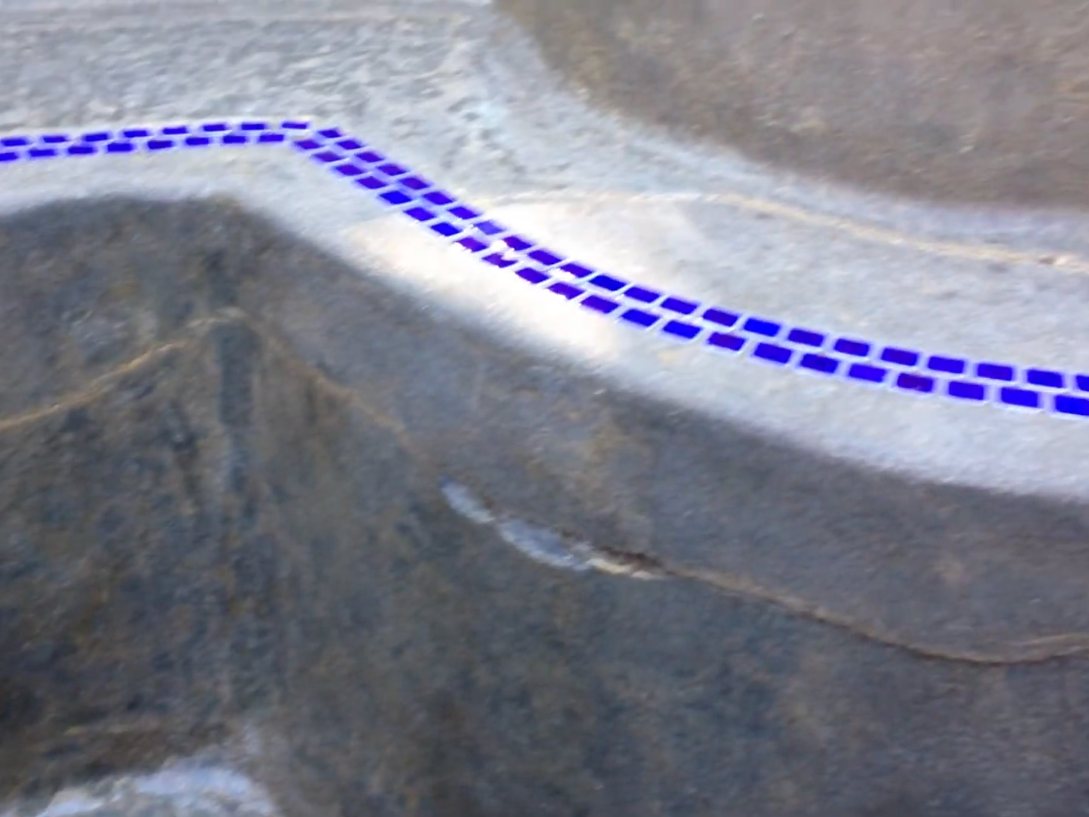
Rebound packed into the steps
Loose gunite overspray was packed in to form these spa steps instead of being thrown away. A few years later, the steps cracked.
Video: Mike the Poolman
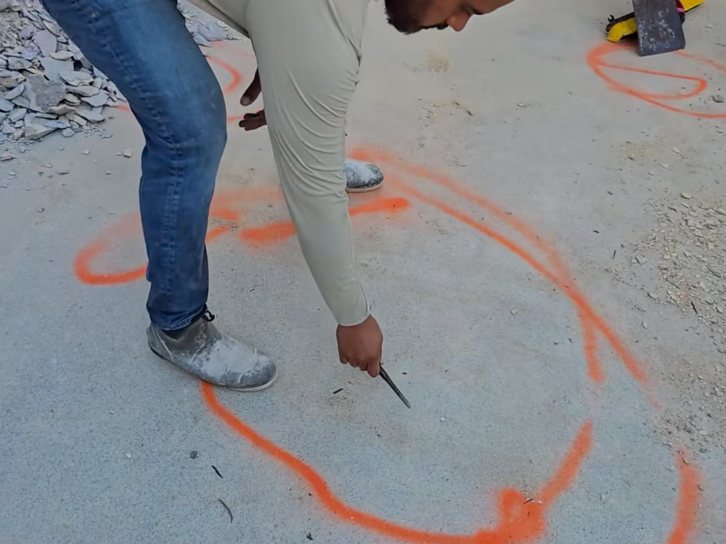
Torn out and redone
A previous low-bid job in Palm Beach Gardens being stripped back to the shell, with soft spots marked for repair.
Video: Innovative Outdoor Living
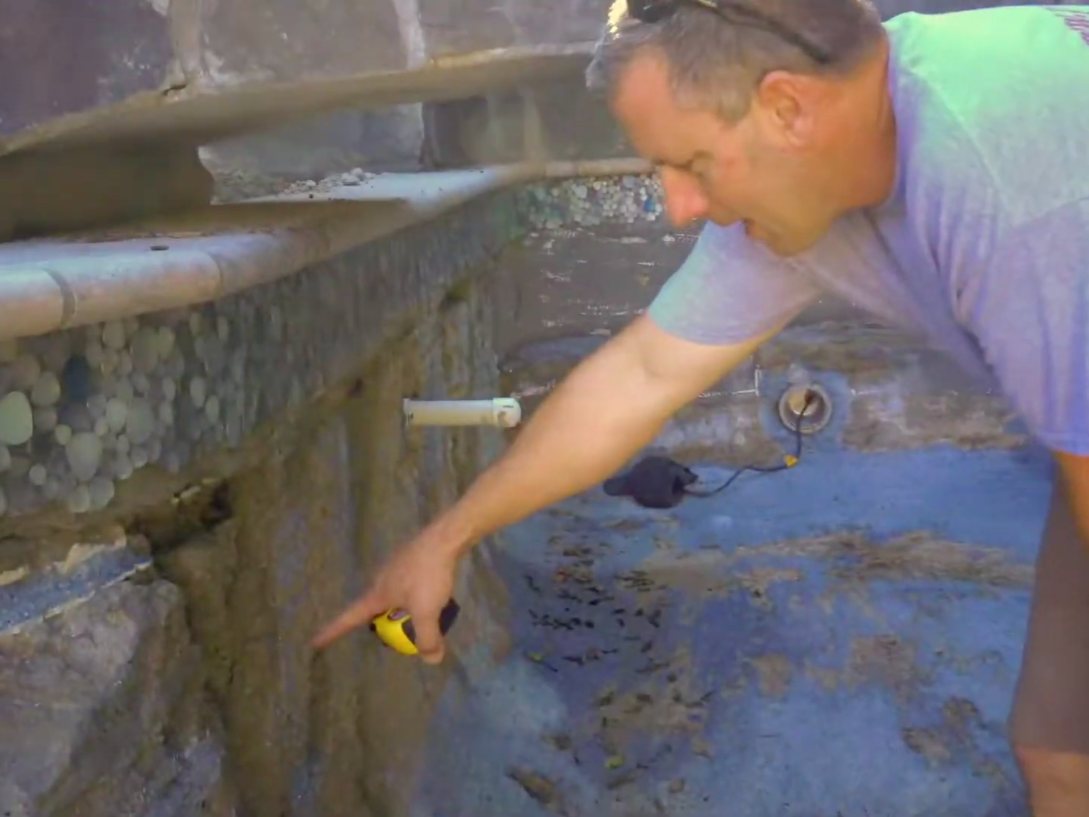
Trimmings thrown into the steps
A remodeler points out rebound trimmings that were tossed into the steps when the pool was built.
Video: Innovative Outdoor Living
From homeowners
"We wish someone had told us."
“We were so excited about our new pool, but the cracks and poor workmanship turned our dream into a disappointment.”
“My pool started cracking after just six years. When we hired a company to repair it, we learned that the original gunite construction was a contributing factor. I wish I had known about shotcrete before building our pool.”
“We spent a fortune on our dream pool, only to end up with cracks, rough spots, and uneven walls. I expected much better quality for what we paid.”
The real cost
Saving a little now can cost a lot later.
Gunite is often the lower bid. But the shell is the one part of your pool you can't easily replace. Fixing it means draining the pool, breaking out concrete and replastering, and sometimes tearing up the deck too.
The honest answer
A highly skilled gunite crew that does everything right can build a good pool. The problem is that you can't watch the nozzle and mixer all day, and you can't see inside the shell once it's plastered. Shotcrete takes the biggest variable out of human hands. When you're spending this much on something you'll own for decades, that's the risk worth removing.
Bring this to your next bid meeting
Five questions to ask every pool builder.
- 1Will my shell be gunite or shotcrete? Get it in writing in the contract.
- 2What compressive strength is specified? The American Shotcrete Association recommends at least 4,000 psi for pool shells.
- 3Can I see the mix design and batch tickets? A shotcrete builder should be able to hand these over.
- 4What happens to rebound? The right answer: it's removed from the pool and thrown away, never used in steps or benches.
- 5How will the shell be cured? Industry guidance calls for about a week of continuous wet curing.